
Growing Security Tensions in the Baltic Sea Challenge Maritime Spatial Planning: Trust in Regulation Is Shaken and Data Gaps Are Widening
What do Russia’s actions, missing data, and critical infrastructure mean for Baltic Sea security and maritime spatial planning? The MSP Day session brought together key insights.
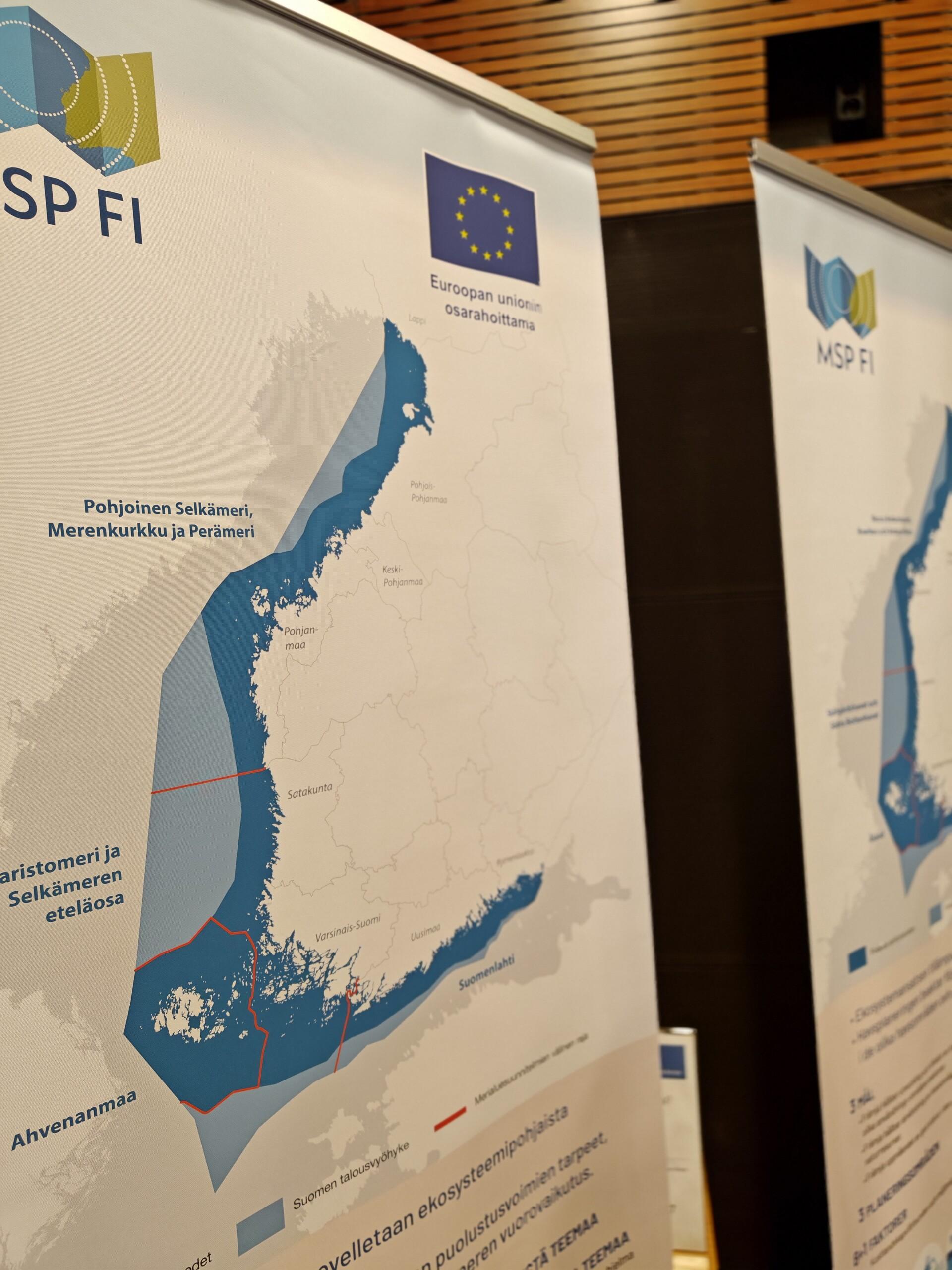
On Tuesday, 25 November, the Ministry of the Environment and the Finnish Maritime Spatial Planning Coordination Group held the annual MSP Day. This year’s theme was the security of supply and overall security on Finland’s seas and coasts. The day had three sessions, and the CoWup and WATERWAYS projects organised together the one on Russia’s war and environmental risks at sea. Both projects belong to the Strategic Research Council’s WAWE programme.
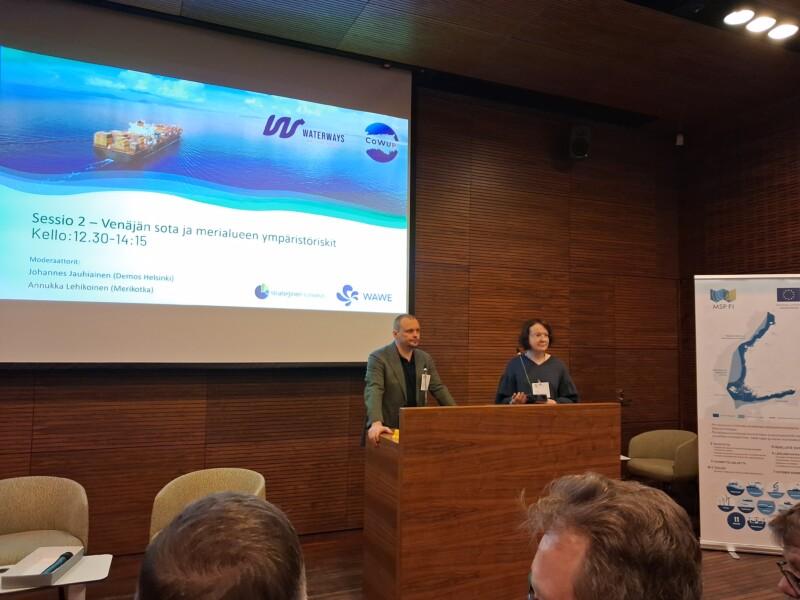
The session was moderated by Johannes Jauhiainen (Demos Helsinki, CoWup) and Annukka Lehikoinen (Merikotka, WATERWAYS). It included three expert talks and a panel discussion. The first talk was given by Professor of Russian Environmental Studies Veli-Pekka Tynkkynen (University of Helsinki, CoWup), who spoke about Russia’s hybrid aggression in the Baltic Sea. He explained why and how Russia wants to cause confusion, problems, and fear at sea. The goals include overloading authorities’ ability to respond, testing the limits of laws, and creating disagreement through unclear but suspicious incidents. However, according to Tynkkynen, Russia still wants to keep oil transport running in the Baltic, which is why we have not seen extremely clear violations of international rules. Oil shipments help finance Russia’s militarisation and keep its economy going.
The second presentation focused on legal issues related to the shadow fleet and sabotage of underwater infrastructure. It was given by Professor of Maritime Law Henrik Ringbom (Åbo Akademi, WATERWAYS). Ringbom reminded listeners not to mix shadow fleet activity and sabotage together. Legally, the shadow fleet itself is not necessarily breaking the law, but sabotage is. So far, there is only one confirmed case in the Baltic Sea where a shadow fleet vessel, Eagle S, was involved in sabotage. Ringbom also mentioned extreme legal scenarios, such as blocking Russian ship passage in the Gulf of Finland, which has been discussed in the media. He noted that this could backfire, because international waters would still exist on both sides of the blocked area, meaning that all ships, including submarines below the waterline, would still have transit rights.
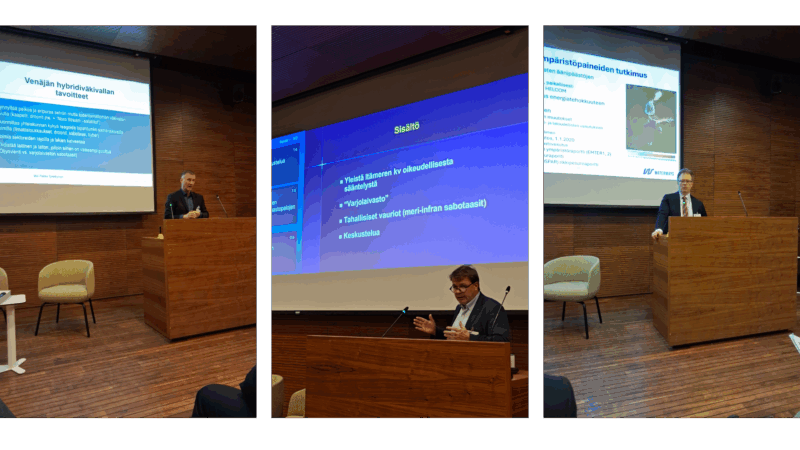
The third presentation, given by senior researcher Jukka-Pekka Jalkanen (Finnish Meteorological Institute, WATERWAYS), focused on geospatial data and satellites. He showed what types of activities remain invisible in the Baltic Sea with current monitoring tools. He has long experience modelling ship emissions and traffic using AIS data, but many activities that cause environmental pressure cannot be seen in AIS.
Because cooperation ended after Russia’s invasion of Ukraine, some Russian emission and accident data is no longer available. According to Jalkanen, the situation can be improved by using satellite monitoring, drones, and other alternative data sources. AI can also help combine AIS and satellite data to identify new patterns and irregular behaviour, and this is being developed in the WATERWAYS project. This could help detect shadow fleet activity more effectively and assess the use of scrubbers with thermal imaging, which would give a more accurate picture of environmental impacts.
After the presentations, the experts joined a panel discussion. A key theme was how the Baltic Sea’s operating environment is changing because international agreements are increasingly ignored or tested. As these agreements are bypassed, countries may be forced to move from trust-based approaches to stronger monitoring. Tynkkynen pointed out that repeated violations may shift thinking among citizens and decision-makers towards prioritising security, which over time could reduce openness, democracy, and research cooperation. Jalkanen added that the crisis is clearly visible in data exchange, as Russia no longer provides data to the EU, and missing climate data makes research harder. While cooperation with Russia would help fill these gaps, Tynkkynen noted that this also involves political risks and can be used as a means of influencing deterrence and blackmail.
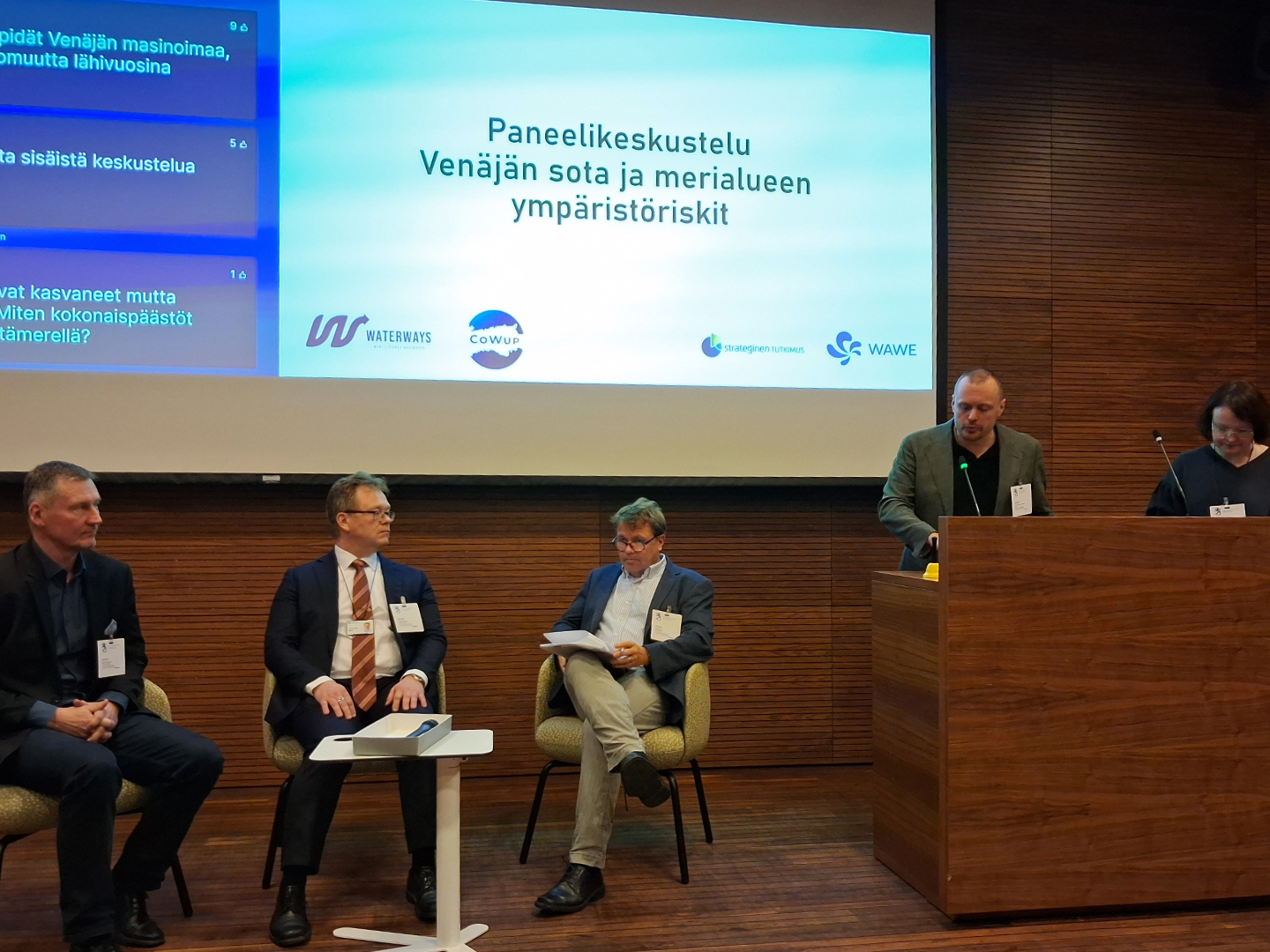
The panel also discussed how certain political decisions could quickly change the whole region’s dynamics. According to Ringbom, Denmark could legally close the Danish Straits temporarily if it invoked national security. But this could trigger harmful chain reactions, since the Baltic shipping route to Russia is very important, especially now that Black Sea transport has been disrupted by Ukrainian attacks. The panel also considered whether Russia could even use the shadow fleet as a threat by hinting at a deliberate oil spill if stricter measures were taken.
The panel encouraged Finnish maritime spatial planning to keep defence and other maritime sectors in balance. Planners need to identify critical areas for infrastructure and energy, and make sure Finland’s, Sweden’s, and Estonia’s plans are compatible. International cooperation will become even more important if actions on the Russian side grow more unpredictable. The situation is already unpredictable, so preparing for many different scenarios is wise.
The final message from the panel was clear: Finland must remember that as a neighbour of Russia, it is vulnerable, and the relationship with Russia must not be naive. New threats require new approaches in legislation and closer cooperation, so that maritime areas can be planned safely and comprehensively in a changing world.