
In the Shadows of the Sea: Unveiling the Risks of the Shadow Fleet
October 2025
They sail in the dark, change their names, and carry risky cargo without proper insurance. The rise of the shadow fleet is rewriting the landscape of maritime safety and raising urgent questions for regions like the Baltic Sea. What happens if one of these ships spills oil, causes an accident, or damages undersea infrastructure?
If you follow maritime news or energy geopolitics, you may have seen references to the shadow fleet (also called the dark fleet or shadow tanker fleet). But what exactly is it, and why should professionals, policymakers, and the general public in the Baltic region care?
In the context of the WATERWAYS project, we believe that the rise of shadow-fleet activities is an urgent signal: risk landscapes at sea are changing, and traditional models may not be sufficient. This blog seeks to explain the phenomenon, the stakes, and how our research is responding.
What Is the Shadow Fleet?
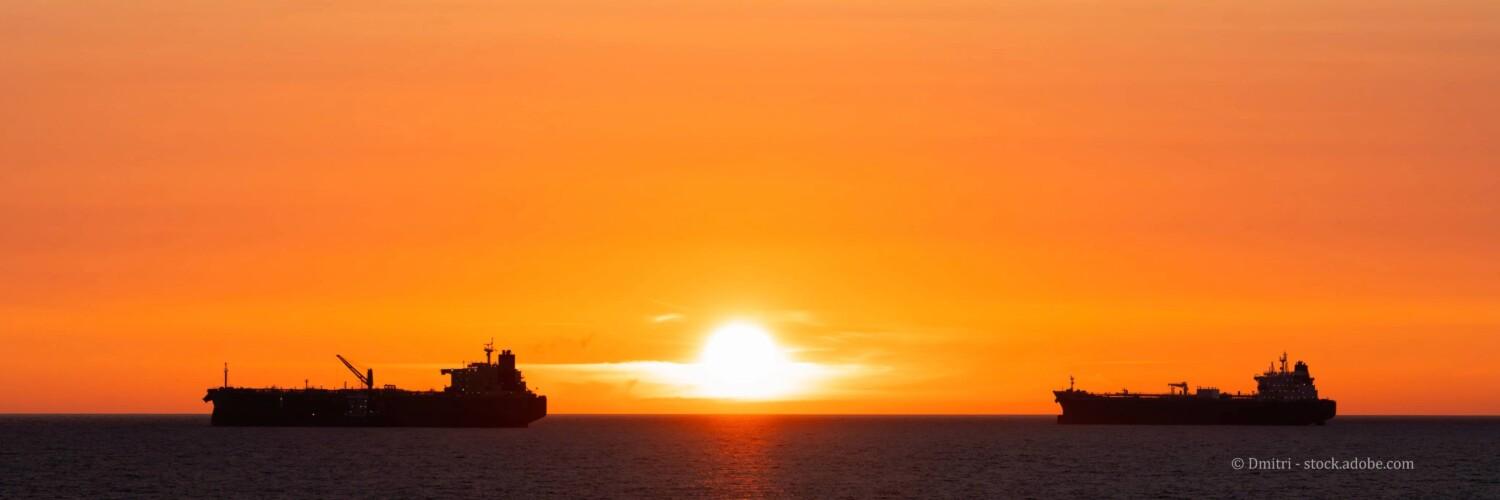
Imagine a ship that doesn’t want to be seen. It sails across busy sea routes, but instead of following the same rules as everyone else, it hides its movements, changes its identity, and makes sure no one really knows who owns it. This is the world of the shadow fleet.
The shadow fleet is a loose network of tankers and cargo vessels that operate outside the normal rules of international shipping. To stay under the radar, they often turn off their AIS tracking systems (the “digital footprints” ships usually leave), change their names and flags frequently, use false paperwork, or transfer oil and cargo between ships in the middle of the ocean. In short, these ships are experts at avoiding oversight.
Over the last few years, the fleet has expanded dramatically. Analysts estimate that between 600 and 1,000 tankers are now operating in this way [1, 2], many of them are older vessels that would otherwise have been retired. Their main cargo is crude oil and refined petroleum products, often moved in violation of sanctions, particularly those targeting Russia after its 2022 invasion of Ukraine [3, 4]. Investigations show that a significant share of these ships were once owned in Europe, especially in Greece [5, 6], before being sold to new operators and re-registered under “flags of convenience.”
Not all shadow fleet ships are the same. Some are highly secretive, with layers of hidden ownership and a long track record of deceptive tricks. Others may show fewer warning signs but still operate with questionable practices. Either way, they share one thing in common: they raise the risks at sea for everyone else.
Why the Shadow Fleet Matters, Especially for the Baltic Sea?
At first glance, the shadow fleet may sound like just another shipping industry problem happening far away. But the risks it brings are very real, and they hit close to home for regions like the Baltic Sea, one of the busiest and most fragile maritime areas in the world.
Environmental and safety risks come first. Many of these vessels are old, poorly maintained, and not held to the same safety standards as regulated ships. That makes accidents more likely, from engine failures to oil spills. Because shadow fleet ships often hide their movements, it can also take longer for authorities to even realize something has gone wrong. In a semi-enclosed sea like the Baltic, the consequences could be devastating. Oil or chemical spills spread quickly, linger for years, and threaten marine life, fisheries, and coastal communities.
There’s also the problem of accountability. Unlike legitimate vessels, shadow fleet ships often lack proper insurance, certification, or even clear ownership. If one of them causes an accident, who pays for the damage? Too often, the burden falls on coastal states, and ultimately, taxpayers – to clean up the mess. This creates an unfair and unsustainable situation where the polluter may simply vanish into the shadows.
Another challenge lies in monitoring and governance. Our maritime traffic systems are built on transparency: ships are expected to broadcast their position, follow known routes, and appear in official registries. But shadow vessels deliberately turn off their tracking devices, reflag under different countries, or even disguise their identities. This makes it extremely difficult for authorities to plan safe sea use, prepare for emergencies, or coordinate search and rescue operations.
The shadow fleet also carries geopolitical implications. These vessels are often tied to sanctions evasion and state strategies. Their presence can trigger military escorts, diplomatic disputes, or tensions in contested waters. In the Baltic, where undersea infrastructure like pipelines and communication cables is dense, uncooperative vessels pose serious security concerns. In fact, in 2024 Finland brought charges against the captain and crew of a shadow fleet tanker, Eagle S, after it dragged its anchor and damaged several undersea cables between Finland and Estonia [7, 8], a stark reminder of how hidden shipping practices can have visible and costly consequences.
The good news is that regional action is starting to take shape. Sweden has tightened its rules, now requiring ships to show valid insurance when they pass through its waters, not just when they dock [9]. Other Baltic and North Sea states have pledged to step up inspections of oil tankers’ insurance documents [10]. And Finland’s handling of the Eagle S case has set an important precedent: even shadow fleet operators can be held accountable within national jurisdictions.
A Call to Awareness and Collective Action
When a single accident at sea can threaten food supplies, trade routes, coastal livelihoods, and even energy security, the rise of the shadow fleet is not just a technical shipping issue. It changes the way we should think about and manage maritime risks. For the Baltic Sea, not recognizing this trend would weaken our ability to respond effectively. It calls for fresh approaches to preparedness and response, especially as these risks may materialize close to home.
So, what can we take away? First, we need to expect the unexpected. Shadow fleet vessels don’t follow the rules, and our policies and risk models must reflect that reality. Second, stronger legal frameworks, inspections, and insurance requirements are essential to close the loopholes that these operators exploit.
Equally important is transparency and cooperation. Sharing data across borders, detecting suspicious vessel behavior, and working together on surveillance will make it harder for shadow ships to hide. And because many incidents will unfold in uncertainty, investing in scenario planning and resilient response systems is critical. Finally, this is not a challenge for policymakers alone. Port authorities, industry players, researchers, and coastal communities all have a stake, and all must be part of the conversation.
In the months ahead, the WATERWAYS project will share findings and updates to help decision-makers across the Baltic region prepare for these evolving risks.
If you work in maritime safety, policy, spatial planning, environmental protection, or the shipping industry, we invite you to join the dialogue. The sea does not respect borders or silos. To face the challenges emerging from the shadows, our responses must be collaborative, informed, and forward-looking.
Avianto Nugroho
Junior Researcher
Kotka Maritime Research Centre – Merikotka
- Braw, E. (2024) The threats posed by the Global Shadow Fleet-and how to stop it, Atlantic Council. Available at: https://www.atlanticcouncil.org/in-depth-research-reports/report/the-threats-posed-by-the-global-shadow-fleet-and-how-to-stop-it/#:~:text=Summary,and%20to%20the%20maritime%20environment. (Accessed: 30 September 2025).
- Georgiou, G. (2025) Report: ‘grey’ tanker fleet expands by 30 vessels monthly, Riviera. Available at: https://www.rivieramm.com/news-content-hub/news-content-hub/report-grey-tanker-fleet-expands-by-30-vessels-monthly-85714#:~:text=A%20year%20ago%2C%20only%20191,Suezmaxes%20into%20the%20grey%20fleet. (Accessed: 30 September 2025).
- Spiro, D., Wachtmeister, H. and Gars, J. (2025) ‘Assessing the impacts of oil sanctions on Russia’, Energy Policy, 206, p. 114739. doi:10.1016/j.enpol.2025.114739.
- Hilgenstock, B. (2025) What effects have energy sanctions had on Russia’s ability to wage war?, Economics Observatory. Available at: https://www.economicsobservatory.com/what-effects-have-energy-sanctions-had-on-russias-ability-to-wage-war#:~:text=First%2C%20the%20embargo%20only%20applies,products%20(see%20Figure%205). (Accessed: 30 September 2025).
- Brooks, R. and Harris, B. (2025) Where did Russia’s shadow fleet come from?, Brookings. Available at: https://www.brookings.edu/articles/where-did-russias-shadow-fleet-come-from/#:~:text=Russia%20has%20built%20a%20massive,to%20engage%20in%20deceptive%20tactics. (Accessed: 30 September 2025).
- Maragoudaki, D. et al. (2025) Shadow fleet secrets: How greek tankers were used to transport Russian oil, Solomon. Available at: https://wearesolomon.com/mag/format/investigation/shadow-fleet-secrets-how-greek-tankers-were-used-to-transport-russian-oil/#:~:text=A%20recent%20report%20by%20the,a%20total%20of%20$6.3%20billion. (Accessed: 30 October 2025).
- Finland charges tanker crew members with sabotage of undersea cables (2025) The Guardian. Available at: https://www.theguardian.com/world/2025/aug/11/finland-accuses-tanker-crew-sabotage-undersea-cables-anchor (Accessed: 29 September 2025).
- ‘it was an accident,’ says captain of anchor-dragging Eagle S Tanker (2025) News. Available at: https://yle.fi/a/74-20178643 (Accessed: 29 September 2025).
- (2025) Sweden to implement measures against Shadow Fleet starting July – SAFETY4SEA. Available at: https://safety4sea.com/sweden-to-implement-measures-against-shadow-fleet-starting-july/ (Accessed: 29 September 2025).
- Group of coastal states around Baltic Sea and North Sea to take targeted measures against Russian Shadow Fleet (2024) Finnish Government. Available at: https://valtioneuvosto.fi/en/-/group-of-coastal-states-around-baltic-sea-and-north-sea-to-take-targeted-measures-against-russian-shadow-fleet (Accessed: 29 September 2025).