
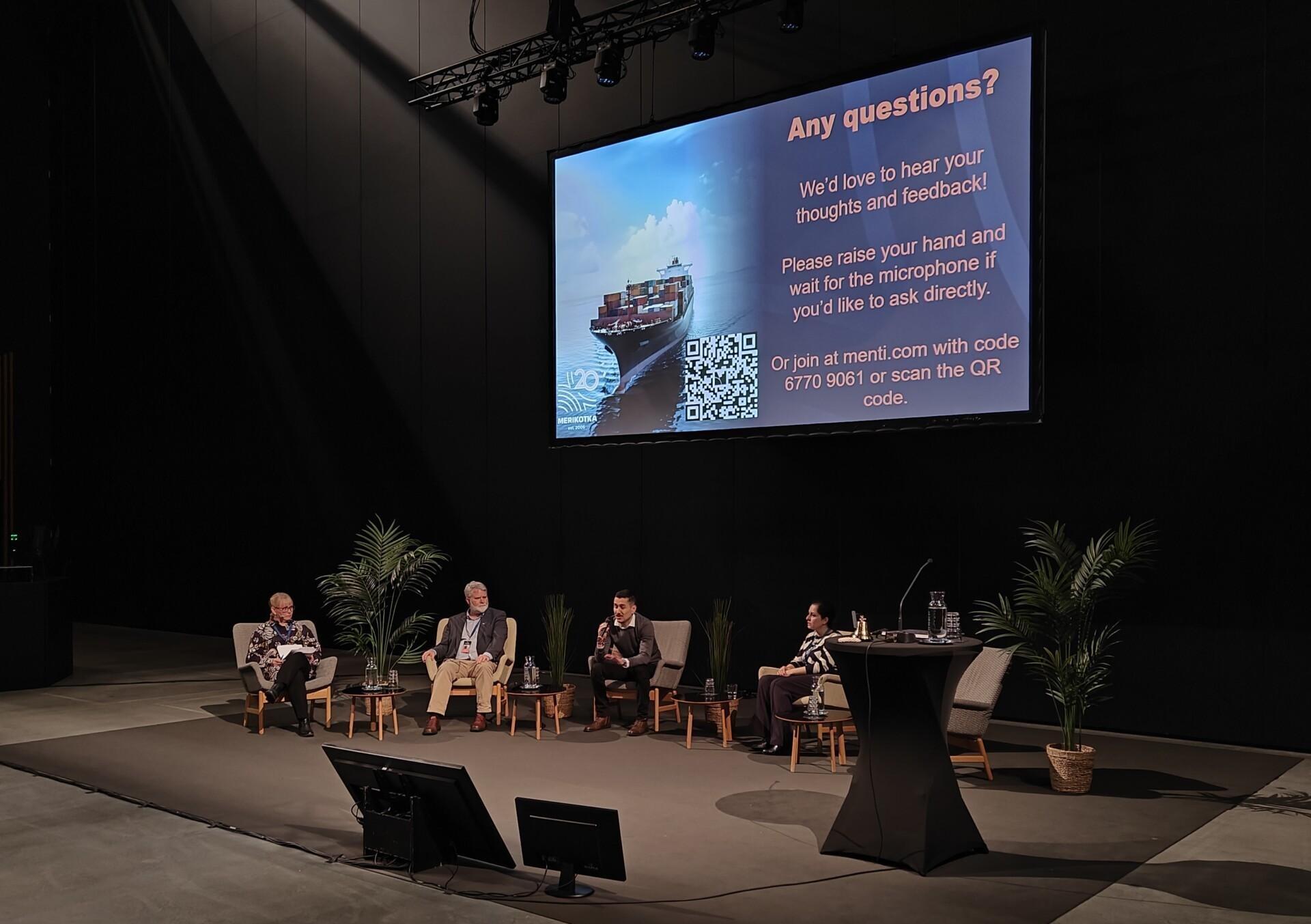
WATERWAYS research participated in the KOMAREC25 Conference
Researchers from the WATERWAYS project took part in the KOMAREC conference held in Kotka at the end of October. At the conference, the researchers presented the project’s objectives, ongoing methodological work, and expected research outcomes.
WATERWAYS researchers took part in the KOMAREC Conference held in late October in Kotka. The Kotka Maritime Research Conference (KOMAREC), organized for the second time, is a new event format designed to support sustainable maritime development through research and societal dialogue. The conference aimed to strengthen interaction between researchers, decision-makers, and stakeholders, while providing multidisciplinary perspectives on how maritime activities can be developed more sustainably in a changing environment.
At the conference, WATERWAYS researchers presented the project’s objectives, ongoing methodological work, and expected research outcomes. The presentation covered topics such as the sustainable use of maritime routes, icebreaker operations, decision support, and the ecological impacts of emission reduction measures in maritime transport. The event provided an excellent platform for discussion and an opportunity to strengthen collaboration with national and international experts.
Below is a summary of the WATERWAYS outputs presented at the conference:
- Marine Waterways as a Sustainable Source of Wellbeing, Security and Safety (Poster)
The project’s introductory poster presented WATERWAYS’ multidisciplinary approach and core objectives. Project leader Mashrura Musharraf served as the poster presenter. The poster highlighted the importance of combining satellite monitoring, AI solutions, risk analysis, and stakeholder collaboration to build a comprehensive understanding of the sustainable use of maritime routes. It also outlined the project’s broader societal impacts, such as improved risk awareness and opportunities for more coherent regulation.
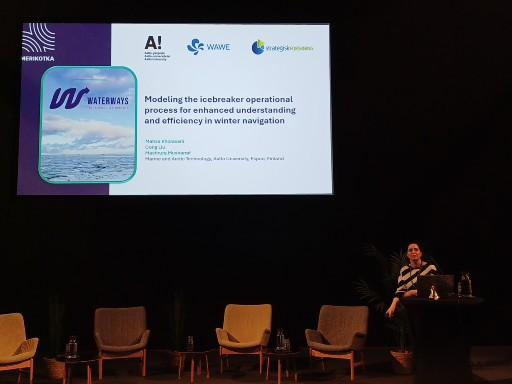
- Modeling the Icebreaker Operational Process for Enhanced Understanding and Efficiency in Winter Navigation (Oral Presentation)
Mahsa Khorasani presented a process model describing the operational workflow of icebreakers. The model is based on qualitative field data and uses BPMN (Business Process Model and Notation) to illustrate the key stages of icebreaker operations and the situational factors that guide operational choices. This approach provides new opportunities for optimizing winter navigation, identifying bottlenecks, and supporting operational training.
- Decision Analysis in the Marine Environment – A System-level Approach Towards Sustainable Decision-making (Poster)
In her poster, Deborah Shinoda introduced a method that integrates decision analysis, scenario work, and Bayesian network modelling to support marine spatial planning. The approach helps examine long-term impacts and uncertainties associated with different policy options. The poster emphasized the importance of combining qualitative and quantitative information to enable more comprehensive and transparent decision-making.
- Green Maritime Traffic: The Unknown Impacts of Emission Reduction on Marine Biodiversity (Poster)
Patrik Kauppi’s poster examined the potential biodiversity impacts of maritime emission reduction measures, based on a systematic literature review. The findings showed that while new technologies reduce greenhouse gas emissions, they may also have unintended ecological side effects, such as increased underwater noise, chemical pollution, or toxic levels. The poster highlights the need to integrate biodiversity considerations more strongly into the green transition of maritime transport.